Blog
Publish: Dec, 29 2026
Introduction
Resistance welding is widely used in aerospace manufacturing due to its efficiency, repeatability, and suitability for high-volume production. However, achieving consistent weld quality in resistance welding requires a high level of process control, equipment stability, and disciplined execution.
Unlike fusion welding, where operator technique plays a dominant role, resistance welding performance is heavily dependent on the interaction between machine parameters, material condition, and electrode performance. Even small variations in these elements can lead to significant changes in weld quality.
This article outlines common process gaps observed in aerospace resistance welding operations and provides key considerations for improving consistency and overall process performance.
Process Stability as the Foundation of Weld Quality
A stable resistance welding process is the foundation for achieving consistent and repeatable weld results. In aerospace applications, variability in welding parameters such as current, force, and timing can directly affect weld integrity.
When process parameters are not tightly controlled, the result may include inconsistent weld strength, expulsion, or incomplete fusion. These issues are often not caused by a lack of capability, but rather by a lack of consistency in how the process is controlled and maintained.
Establishing a stable process requires not only defining parameters but also ensuring they remain consistent throughout production.
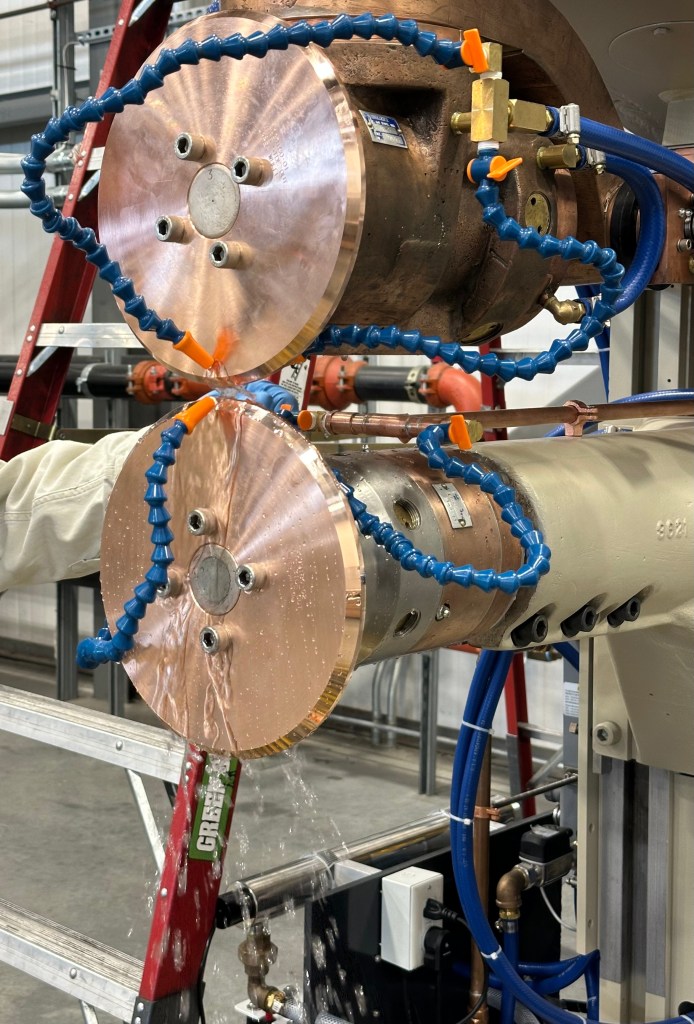
Electrode condition is one of the most influential factors in resistance welding quality. Over time, electrodes are subject to wear, deformation, and contamination, all of which can impact current flow and contact resistance.
As electrode condition changes, so does the weld output. This can result in variation in weld size, strength, and consistency.
Maintaining electrode condition requires a structured approach to inspection, maintenance, and replacement. Consistency in electrode geometry and surface condition is critical to maintaining a stable welding process.
Resistance welding machines must be properly qualified and periodically verified to ensure consistent performance. This includes validating that weld schedules produce the intended results under actual production conditions.
Without proper machine qualification, there is a risk that the welding process may drift over time, leading to variability in weld quality.
Process verification ensures that:
This is especially important in aerospace applications where repeatability and traceability are required.
The condition of the material being welded has a direct impact on resistance welding performance. Surface cleanliness, coatings, and material consistency all influence contact resistance and heat generation.
Variations in material condition can lead to inconsistent weld formation, even when machine parameters remain unchanged.
To maintain consistency, it is important to ensure that material preparation and handling practices support a stable welding process. This includes controlling surface condition and minimizing variability before the welding operation begins.
A controlled resistance welding process requires ongoing monitoring and verification. Simply setting parameters is not enough; the process must be observed and maintained throughout production.
Monitoring key process indicators helps identify trends, detect variation, and maintain process stability. Without proper monitoring, small variations can accumulate and lead to larger inconsistencies in weld quality.
Consistency is achieved when the process is not only defined, but actively controlled.
As with many welding processes, a common gap exists between documented procedures and actual shop floor practices. Procedures may define acceptable conditions, but consistency depends on how well those procedures are implemented in production.
Ensuring alignment between engineering intent and operator execution is critical. This includes clear communication of requirements, proper training, and consistent application of procedures.
When procedures and execution are aligned, the welding process becomes more predictable and repeatable.
Resistance welding performance in aerospace applications depends on maintaining consistency across multiple variables, including equipment performance, electrode condition, material preparation, and process control.
The most common gaps are not related to capability, but to variability. When variability is reduced and the process is stabilized, weld quality becomes more predictable and consistent.
In aerospace resistance welding, consistency is the result of control. When the process is properly defined, maintained, and monitored, the outcome is not left to chance.
Organizations that focus on process stability and disciplined execution are better positioned to achieve reliable results and meet demanding aerospace requirements.
Amer Welding Solutions supports aerospace manufacturers with resistance welding process development, machine qualification, weld schedule verification, and NADCAP readiness to improve consistency and performance.
